Finally! An Agent Request for a "Partial"


I’ve got to post this now–in case the story ends soon.


After months of querying, with both the query letter and pitch developing along the way, I received my first glimmer of hope in my inbox today.


It’s a small thing really. Nothing spectacular. But after dozens of form rejections, a personal email from an agent means a lot.

“Thanks for your query. Mind sending along the first five pages of your manuscript in the body of an e-mail? I’d be happy to take a look and let you know whether the style is the best fit for me.”


I realize that there isn’t an ounce of promise in that email. It is simply a request for a few pages.


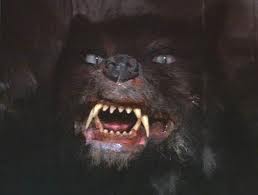
The Gmork inside me is crouching, fur bristling, growling, “Ehhhh! It means Nothing. She’ll just read it and reject it like all the others. The Nothing is coming.”


But the Falkor inside me is laughing. “You never know. It only takes one…”


I’m hoping Falcor wins.

I’m a Loser Baby


Well, after a month of waiting, 10,000 authors’ blogs will have entry fodder for the day. ABNA announced the winners of those who made it past the Pitch phase in the contest.

General Fiction
YA Fiction

I searched the YA list; not once, nor twice, but seven times to make sure my name was missing. I did a “Find” for my real name, my pen name, my birth name, my mother’s maiden name–just in case. Nothing. So, I repeated the search on the GenFic list, just in case it was mistakenly categorized. Nothing.

So, I am putting the whole experience into perspective.
1. The contest entry is really only equal to a single query submission.
2. I know the pitch I am currently including in queries is much stronger than the original I submitted to the contest.

Here’s the new tagline:

Starting over can be a good thing—unless you’ve already lived a thousand lifetimes,
and still can’t get it right.

Here’s the new Pitch:

Oblivion. Rebirth. Failure. Oblivion.

Capritare has no idea how many times he has repeated this sequence, but he knows it is time to end it. He stands before the three sovereign entities. Which one will lead him to completion: the masculine Yramid, the feminine Pheras, or the mysterious Esque? He will be granted seven such choices in his short lifetime, after which he will be judged.

He is not alone on his quest. Hundreds of others struggle with the ever-changing embellishments of wings, antlers, tentacles; and the search for a lifelong companion. In a world where girls can be masculine, boys can be feminine, and everyone can switch at any time—Capritare experiments to find a mate. His experiences lead him through the sweetness of love, and the pain of disappointment.

As the seventh cycle ends, they each must vow to only one of the entities. Capritare is drawn to one in particular, but he is afraid to eat the proffered seed that will confirm his choice. If it is the wrong one, he will return—yet again—to oblivion.

So, like all the other “losers”, I move on. Time for another querying blitz! And I’ll be trolling the blogs to see how many more response posts I can find.

[Disclaimer: At the request of a friend, I must note that this is not a self-pitying post. The title and use of the the term “Loser” are intended as tongue-in-cheek hyperbole!] ::: insert smirk here :::

What’s Your Book About?


Over the holidays, I got to hone the verbal pitch for my novel in response to the question:
“So, what’s your book about?”

It seems like such an easy question to answer. That is, until the words start gurgling out as though spoken by some other mouth that has no clue what it’s babbling. While I do not have my response boiled down to a succint attention-grabbing answer, this simple question from family and friends has helped me hone it. As I continue to refine my response, I at least have a rough draft of the actual pitch set down in writing.

Capritare looks down at the blood streaming from his wound. He never should have played the game. His hooves are swift but they are no match for the others sporting horns & antlers. He can’t afford an injury. Time is running out.

The Ogen demand his decision. Which of the three deities will he vow to? Each possesses traits Capritare would like to call his own: strength, healing, magic. He wants them all but can only choose one. So, he sets out on a journey to discover which he desires most.

His quest intersects with that of others faced with the same decision. Their journeys into the dark of Thick and the waters of Deep take them closer to learning the true essence of the Ogen. Along the way, Capritare discovers a rare Ranthanalle. What’s is its purpose? Can it help him unlock the answer he is searching for?

The seven cycles he has been given are racing to an end. A decision must be made. If he will not choose between the three Ogen, then he will end up with the only other option– annihilation. But Capritare has learned too much about himself and the deities to let that happen.

CAPRITARE is a young adult fantasy set in a rich world teeming with ever-changing life and adventure at every turn.

While the written pitch is farther along than the verbal “elevator-pitch”, I am quite aware that they both need work. The more my loved ones ask me about it–the more I realize that I need to prepare for the time when I’ll be asked by someone who doesn’t really know nor care about me personally. So, I’m allowing these gentle stumblings to prepare me for the future ones that could mean the difference between getting published or not.

At this point, I have gotten strong responses by replying with a question of my own:
“If given the choice: would you choose to sprout a rack of antlers, a full set of magnificent wings, or have rows of glowing jewels embellishing your body?”

This question gets the listener thinking–personalizing–and transitions perfectly into my explanation of the major themes of sexual identity, self-discovery & personal growth within the book. I have used this method a few times now & found that the initial question engages the listener to the point of wanting to know more. For now, that is my verbal opener. And, so far, it has garnered the most interest in & dialogue about my book.

“If it aint broke….”

It’s Harder to Write the Pitch than the Novel


Versions of it go by a lot of different names depending on the length & audience.

  • Pitch
  • Hook
  • Synopsis
  • Blurb
  • Logline

What it all boils down to is a succint, catchy description that makes the agent, publisher or potential reader want to know more. Honestly, crafting this tiny beast has proven itself more daunting than the actual writing of the novel. My current challenge: condense 111,000 words into 300 or less.

Here is what I have learned so far. It can’t be merely plot but it has to provide an overview. The description can’t be too specific or too vague. It has to, of course, make the reader salivate for more. And, most importantly, it is hard as hell to get it right.

I am currently on approximate draft number 2,435,872. Just when I think I might have it licked, the awesome folks at Amazon’s Pitch Thread rip it to bits and expose its [many] flaws. I am grateful for the feedback, suggestions & tweaks but the whole process makes me wonder– is my book-writing as bad as my pitch-writing? If so, it looks like self-publishing may be my only option. Ahhh, but the optimistic dreamer in me won’t even entertain the thought!